
Cognitive decline, faith, and life journeys: reflections from conversations
The world is ageing rapidly, with about 10% of the global population now over 65, a share expected to rise sharply by 2050. India, though younger, is following the same path, with 7% of its population above 65 and a growing 60+ demographic. Dementia is increasing alongside this shift: over 55 million people worldwide have dementia, and India has an estimated 4-9 million people living with dementia.
Loneliness adds a profound social burden, affecting 20-40% of older adults globally and nearly half of India’s elderly. Caring for people with cognitive decline and dementia is very challenging for care givers.
Recently, a few of us, in our early and mid-sixties, met and took a cognitive assessment test. This stemmed from a need to determine whether we were experiencing age-related memory loss, mild cognitive impairment, or the early onset of other dementia syndromes.
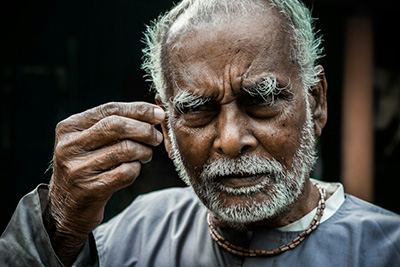
Age-related memory loss (normal ageing) involves a slight, gradual decline in processing speed and memory, such as occasionally forgetting names or appointments but remembering them later. In contrast, mild cognitive impairment (MCI) represents a stage between normal ageing and dementia. It features noticeable memory and thinking problems that are more severe than normal, but not yet severe enough to disrupt daily independence. On the other hand, early-onset dementia (early-onset Alzheimer’s and others) presents symptoms such as severe memory loss, confusion, or behavioural changes that appear before the age of 65.
There were three underlying issues that we did not openly express as we started the process, though they surfaced later. One was the concern that all of us were experiencing some memory loss, but we were not sure whether it was something more sinister than normal ageing.
There was also unexpressed anxiety (at least for me) regarding what the future would look like if something more serious emerged.
And there was a fear, arising from a desire, that we should not become dependent on others at any stage of life. For me, this was real because close members of my family had gone through serious dementia syndromes.
These are legitimate concerns, anxieties and fears. I have encountered this with many others of my generation. Some may not express it, and might hold on to God in faith, but it is legitimate and acceptable to have such concerns and fears.
A few weeks prior to this, as part of our routine visits to friends and families, I met with a husband and wife in their mid and early nineties. Two issues raised during those conversations stood out. The 95-year-old theologian, who retired as principal of some prestigious theological colleges, made these statements:
“There are only three absolutes in life – birth, life and death. The short life is what we need to consider as a gift. We had no control over our birth nor over our death. We should not fear death; it is part of the life process. There is a time to be born, to live and to die. Even when I am on this bed, God is there with me. Some of us think that when we are in pain, God is not there - but no, He is there.
“Some of us think that when we sin, God is not there. No, that is when He is nearest to us, trying to reach out. But He does not tell us when we will die. If He told me I would die in two years, though I say I do not fear death, I would become anxious. So, it is better for me that I do not know. I am losing my memory. It is not losing memory, but my thinking capacity is declining. Again, it is part of life - a season to think and a season to stop thinking. Maybe I overused my brain and it needs rest now.”
His spouse, also a theologian, said on the other hand: “I do not understand why God should extend our lives like this. I see no purpose.”
I, in my desire to explain, made some statements, and the moment I finished, I felt like the friends of Job, trying to explain what they thought they understood, but really did not.
Ageing might give one wisdom, logic and rationality from years of journeying with God and experiencing His faithfulness, but there will still be things we do not know, uncertainties and questions for God. This is again something we experience if we listen well to the many elderly around us.
Having had the opportunity to care for close family members with advanced dementia, and having accompanied others, there are three struggles that stand out - among the many other issues care providers struggle with.
One is the issue of changed “identity”. The person who “has lost mind” or whose “thinking is impaired” does not look and feel like the one you knew. Has his or her identity changed? In the book, Dementia: Living in the Memories of God, John Swinton says, we see people from what they communicate to us. Identity is linked to their mind. Calling someone lost or of impaired mind assumes we can judge their mind, that the mind exists only in the head, and that clear thinking defines a person. All three assumptions are doubtful. People with dementia are not simply “losing their minds,” and the term “dementia” itself is misleading.
The second issue is their knowledge of God and expressions of faith. We look at faith through expressions of intellectual knowledge and declarations of experiences, emerging out of their contemplation. But then, when one can no longer remember either oneself or God, or contemplate who God is (as per our understanding from what we perceive), then we face a challenge. We struggle with the question: How can the person whom I care for know God if he or she can no longer contemplate God? Does he or she really know God?
The third issue is unexpected and challenging reciprocations when care is provided. There are many caregivers who have found it difficult to “love unconditionally”. Because the person cared for might reciprocate with seemingly no gratitude or at times even resentment. This could be logically explained away as part of cognitive decline, but when one experiences the same, it is neither easy nor pleasant.
How can people of faith respond to some of these issues, whether you are facing potential memory loss, currently going through it, or caring for someone with dementia?
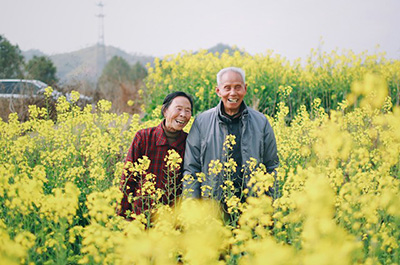
One – Uncertainty is the certainty of our lives, as Oswald Chambers would put it. There are many things that we know for sure at an early age. They become grey as we grow older. Logical explanations will not suffice for the many questions we face. But there is one thing we can be sure of - God will be there with us, whatever cognitive or other decline we might go through.
Two – As we go through issues that we do not understand, it is okay to ask these questions to God. God is near to us when we are far away and feel confused, trying to reach out to us. And he welcomes such questions. As people go through such seasons, it is the compassionate presence that receives these questions will make a difference, more than all the logical and theological explanations that we might feel obliged to give.
Three – Absolute dependence is the true state of all human beings. We live as if we have moved from the dependence of early years to the independence of youth and adulthood. But we do not realise that even in that stage, when we feel independent, we are actually dependent and interdependent on others and God. This radical dependency has important implications for how we view people with cognitive decline or look ahead at our own lives.
Four - The identity of a person is not linked to what he or she can articulate. Identity and humanness emerge from the Imago Dei bestowed upon each person. John Swinton reminds us in his book that the current tendency is to perceive the subjective, self-aware, cognitive self as the necessary qualification for humanness and theological construction. We should realise that knowing about God is not as important as knowing God, and that knowing God involves much more than memory, intellect and cognition. And God is one who knows us at all times.
Five - If knowing God or rather God knowing us is the true spiritual experience, and if that knowledge involves much more than intellect and cognition, then the spirituality of the person should be understood as a person known by God. If God knew us when we were still in the womb and if God does have plans for us to prosper, then neurological decline cannot separate us from the love of God and our ongoing vocation as human beings.
Finally, we need to recognise that we are receivers of unconditional love, which we did not deserve. Rather, our response at times would have been challenging and unacceptable by any human standards, but God forgives and receives us. If we have received such love, the call on our lives is to pour it out, however difficult it might be.
But then, we can never face cognitive decline, death, or caring for others on our own. As L. S. Dugdale reminds us in her book The Lost Art of Dying, “To die well, we must learn how to live well.” But that comes only by accepting the reality of decline and finitude, having a community to journey with, and the absolute surety of God’s presence with us, whatever we might be experiencing.